
CUET Economics 2026 Chapter-wise Weightage
Macroeconomics had a disproportionate share of questions per chapter in 2026: About 25 of the 50 questions from just 6 chapters, while Indian Economic Development had about 15 from 8 and Microeconomics had about 10 from 5. But in 2024, Indian Economic Development accounted for almost half the paper, about 24 of the 50 questions, and Macroeconomics only 15. So, prepare all three.
Share of Economics questions by book
Chapter-wise questions per paper
Average number of questions per paper, CUET 2026
Important Chapters for CUET 2027 Economics
You cannot really skip chapters. Almost every chapter came up in most papers, and how many tended to vary a lot across slots. Introduction to Macroeconomics came up in only 7 of the 16 papers, but one paper had a whole passage on it.
Questions per paper, lowest and highest
The fewest and the most questions a chapter had in one paper, and its average, CUET 2026
Important chapters vary across years. So, cover every chapter thoroughly, and do not over-index on 2026 weightages.
Chapter-wise questions per paper by year
Average number of questions per paper in each year, CUET 2022 to 2026
| Chapter | 202616 papers | vs 2024 | 20243 papers | 20237 papers | 20225 papers |
|---|---|---|---|---|---|
| Macroeconomics | 24.8 | +9.8 | 15.0 | 21.9 | 26.8 |
| Introduction to Macroeconomics | 0.9 | −1.4 | 2.3 | 0.3 | – |
| National Income Accounting | 5.9 | +4.2 | 1.7 | 5.1 | 7.0 |
| Money and Banking | 4.0 | +0.7 | 3.3 | 4.4 | 5.4 |
| Income and Employment | 6.1 | +3.8 | 2.3 | 4.9 | 6.2 |
| Government Budget | 3.9 | +1.9 | 2.0 | 3.4 | 5.4 |
| Open Economy | 4.1 | +0.8 | 3.3 | 3.7 | 2.8 |
| Indian Economic Development | 15.0 | −8.7 | 23.7 | 21.1 | 18.0 |
| Eve of Independence | 0.9 | −6.1 | 7.0 | 4.1 | 1.4 |
| Indian Economy 1950-1990 | 1.4 | +0.1 | 1.3 | 3.3 | 2.6 |
| LPG | 1.9 | −1.8 | 3.7 | 2.3 | 0.8 |
| Human Capital Formation | 2.1 | +1.4 | 0.7 | 1.4 | 2.6 |
| Rural Development | 2.3 | +0.6 | 1.7 | 2.4 | 1.4 |
| Employment | 1.1 | +0.8 | 0.3 | 2.1 | 2.8 |
| Environment | 2.4 | −2.6 | 5.0 | 2.7 | 2.8 |
| India and its Neighbours | 2.9 | −1.1 | 4.0 | 2.7 | 3.6 |
| Microeconomics | 10.2 | −0.8 | 11.0 | 5.9 | 3.4 |
| Introduction to Microeconomics | 0.9 | −4.8 | 5.7 | 1.9 | 1.4 |
| Theory of Consumer Behaviour | 2.3 | +0.3 | 2.0 | 3.9 | 2.0 |
| Production and Costs | 3.0 | +2.3 | 0.7 | – | – |
| Perfect Competition | 1.9 | +0.9 | 1.0 | – | – |
| Market Equilibrium | 2.2 | +0.5 | 1.7 | 0.1 | – |
2025 is left out of the table: Its papers had almost no Indian Economic Development questions (about 1.6 a paper), so its split says little about CUET 2027.
Recommended Study Order for CUET 2027 Economics
Start with Macroeconomics, as it had the highest weightage in 2026. Then do IED, and revise it multiple times, as it is mostly recall based. Do Micro last. Within each book, follow the NCERT order.
Macroeconomics
- Introduction to Macroeconomics0.9 per paper
- National Income Accounting5.9 per paper
- Money and Banking4.0 per paper
- Income and Employment6.1 per paper
- Government Budget3.9 per paper
- Open Economy4.1 per paper
Indian Economic Development
- Eve of Independence0.9 per paper
- Indian Economy 1950-19901.4 per paper
- LPG1.9 per paper
- Human Capital Formation2.1 per paper
- Rural Development2.3 per paper
- Employment1.1 per paper
- Environment2.4 per paper
- India and its Neighbours2.9 per paper
Microeconomics
- Introduction to Microeconomics0.9 per paper
- Theory of Consumer Behaviour2.3 per paper
- Production and Costs3.0 per paper
- Perfect Competition1.9 per paper
- Market Equilibrium2.2 per paper
CUET Economics Difficulty Level
Economics is fairly scoring, as about half of every paper tends to be Easy and only 1 or 2 questions are Hard. So, try to maximise your attempts: 50 questions in 60 minutes is about 72 seconds a question.
Average number of questions by difficulty
Of the 50 questions in a paper, CUET 2026
60 minutes for 50 questions: About 72 seconds a question.
Indian Economic Development has the largest share of Easy questions (62%), Microeconomics the smallest (38%). Environment, Introduction to Microeconomics and Employment tend to have more Easy questions. Perfect Competition, Production and Costs and Eve of Independence have the fewest.
Difficulty split by book
Share of each book's questions, CUET 2026
CUET Economics Question Types
Economics has 5 different question types. In every paper there are about 24 direct, 10 passage-based, 6 multi-statement, 5 Match the List and 5 sequence questions.
Question formats
Average number of questions per paper and the share that is Easy, CUET 2026
Multi-statement, Match the List and sequence questions tend to be harder. So, do the direct and passage ones first.
Difficulty by question type
Average number of questions per paper, with the Easy/Medium/Hard split of each type, CUET 2026
| Question type | Per paper | Difficulty |
|---|---|---|
| All questions | 50.0 | 51%46% |
| Direct | 24.4 | 66%32% |
| Passage-based | 10.0 | 78%21% |
| Multi-statement | 5.6 | 12%81% |
| Match the List | 5.0 | 14%84% |
| Sequence | 5.0 | 90% |
CUET Economics Question Types: Theory vs Numericals
Theory tends to dominate the paper with 45 of the 50 questions, and numericals only about 5. But numericals tend to be harder than theory: Only about 1 in 9 numericals is Easy, compared with about half of theory questions.
Theory and numericals per paper by year
Average number of questions per paper, CUET 2022 to 2026
Difficulty, theory vs numericals
Average number of questions per paper, with the Easy/Medium/Hard split, CUET 2026
| Question type | Per paper | Difficulty |
|---|---|---|
| Theory | 45.1 | 55%43% |
| Numericals | 4.9 | 79% |
Theory Question Types
Theory questions mostly test concepts and definitions from the NCERT. IED tends to ask lots of dates: About 25% of its theory questions are dates and events, so make sure you revise its timelines.
Theory questions by type
Share of the theory questions outside the passages, CUET 2026
| Type | Example | Share |
|---|---|---|
| Concepts and relationships | What will happen in the economy if aggregate demand (AD) is less than aggregate supply (AS)? | 27% |
| Definitions and terms | Goods that possess characteristics of excludability and rivalry are known as ___. | 23% |
| Policies and institutions | Which of the following is not a qualitative tool of the Reserve Bank of India? | 14% |
| Sequences | Arrange the following measures of money supply in decreasing order of their liquidity.A. M4B. M2C. M1D. M3 | 14% |
| Curves and graphs | Which line consists of all bundles that cost exactly equal to consumer income? | 8% |
| Dates and events | The present day fast industrial growth in China can be traced back to the reforms introduced in ___. | 8% |
| Formulas | Identify the correct money multiplier formula. | 6% |
CUET Economics Numericals: Chapters and Question Types
Most numericals come from Macroeconomics (about 3.4 a paper against 1.6 from Microeconomics), and almost half (48%) from just two of its chapters, Income and Employment and National Income Accounting. So, practise these two the most. No IED chapter had a numerical.
Numericals per paper by book
Average number of numericals per paper, CUET 2026; open a book for its chapters
Macroeconomics Numerical Types
Numerical types are well defined, and tend to repeat across papers. So, practise each type well.
Macroeconomics numericals by type
Share of the Macroeconomics numericals, CUET 2026
| Type | Example | Share |
|---|---|---|
| National income aggregates | Find GDP at market price from a table of values. | 17% |
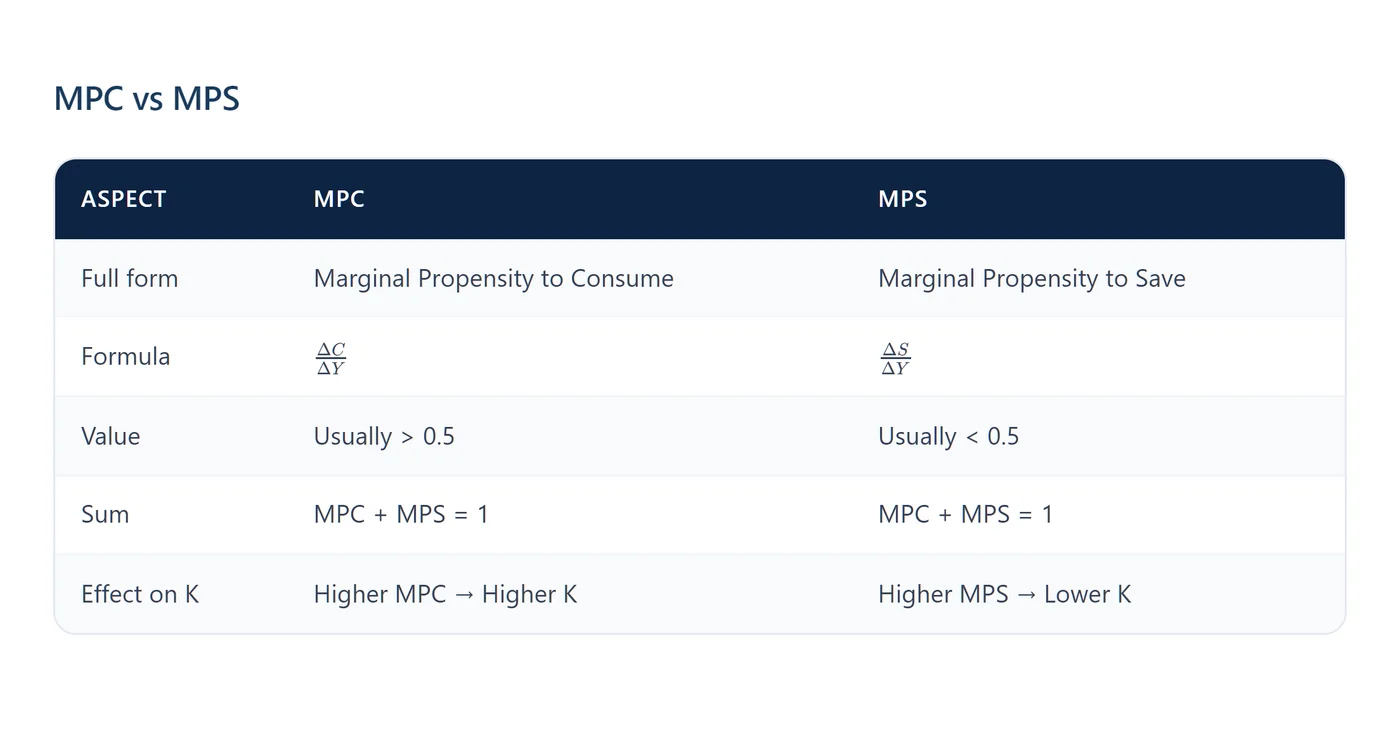
| Multiplier value | MPS = 0.2. Find the investment multiplier. | 11% |
| Credit creation | Deposits ₹200 cr, reserve ratio 5%. Find the maximum loan. | 9% |
| Equilibrium income | C = 100 + 0.7Y and I = 500. Find equilibrium income. | 7% |
| Change in income | Investment rises ₹2 lakh and k = 1.5. Find the change in income. | 7% |
| Consumption function | C = 150 + 0.8Y. Find autonomous consumption. | 7% |
| Real and nominal GDP | Real GDP is ₹1,100 and the deflator is 1.5. Find nominal GDP. | 7% |
| Tax and spending multipliers | MPC = 0.8. Find the tax multiplier. | 6% |
| Value added | Sales ₹50, intermediate goods ₹10. Find the value added. | 6% |
| Current account balance | Exports ₹400 cr, imports ₹750 cr, invisibles ₹30 cr. Find the balance. | 5% |
| Consumer price index | A basket of rice and cloth gets costlier. Find the CPI. | 4% |
| Fiscal deficit | Spending $2,800 mn, non-debt receipts $2,100 mn. Find the deficit. | 4% |
| Primary deficit | Spending ₹700 cr, receipts ₹550 cr, interest ₹50 cr. Find the deficit. | 4% |
| Inventories | Opening stock 400, output 2,000, sales 1,500. Find the closing stock. | 2% |
| Money multiplier | Banks keep 50% of deposits as reserves. Find the multiplier. | 2% |
| Revenue deficit | Find the revenue deficit from a table of budget items. | 2% |
Microeconomics Numerical Types
Micro had only about 1.6 of 50 numericals in 2026, but this may vary across years. So, practise each type well.
Microeconomics numericals by type
Share of the Microeconomics numericals, CUET 2026
| Type | Example | Share |
|---|---|---|
| Price elasticity of demand | Price rises from ₹10 to ₹15, and demand falls from 20 to 10. Find the elasticity. | 28% |
| Price elasticity of supply | Price rises from ₹10 to ₹30, and supply from 200 to 1,000 balls. Find the elasticity. | 16% |
| Marginal and average product | TP rises from 40 to 50 as labour goes from 3 to 4. Find MP and AP. | 16% |
| Production function | Q = 5L½K½. Find the output with 100 units each of L and K. | 8% |
| Cost (AVC and MC) | TFC is ₹20. TC is ₹44 at 3 units and ₹49 at 4. Find the MC of the 4th unit. | 8% |
| Market equilibrium price | qd = 700 − p and qs = 500 + 3p. Find the equilibrium price. | 8% |
| Marginal utility | 6 bananas give 15 units of utility, and 7 give 18. Find the MU of the 7th. | 4% |
| Budget line | With ₹15 to spend and prices of ₹2.50 and ₹1.50, where does the budget line meet each axis? | 4% |
| Total revenue | Find TR from AR and quantity for four options, and arrange them in order. | 4% |
| Unit tax | A unit tax of ₹2 on 10 units. Find the total tax paid. | 4% |
BluePrint Notes and Flashcards for CUET Economics
Our NCERT-based BluePrint Notes make every chapter simple and structured, with clear graphs and step-by-step numericals.
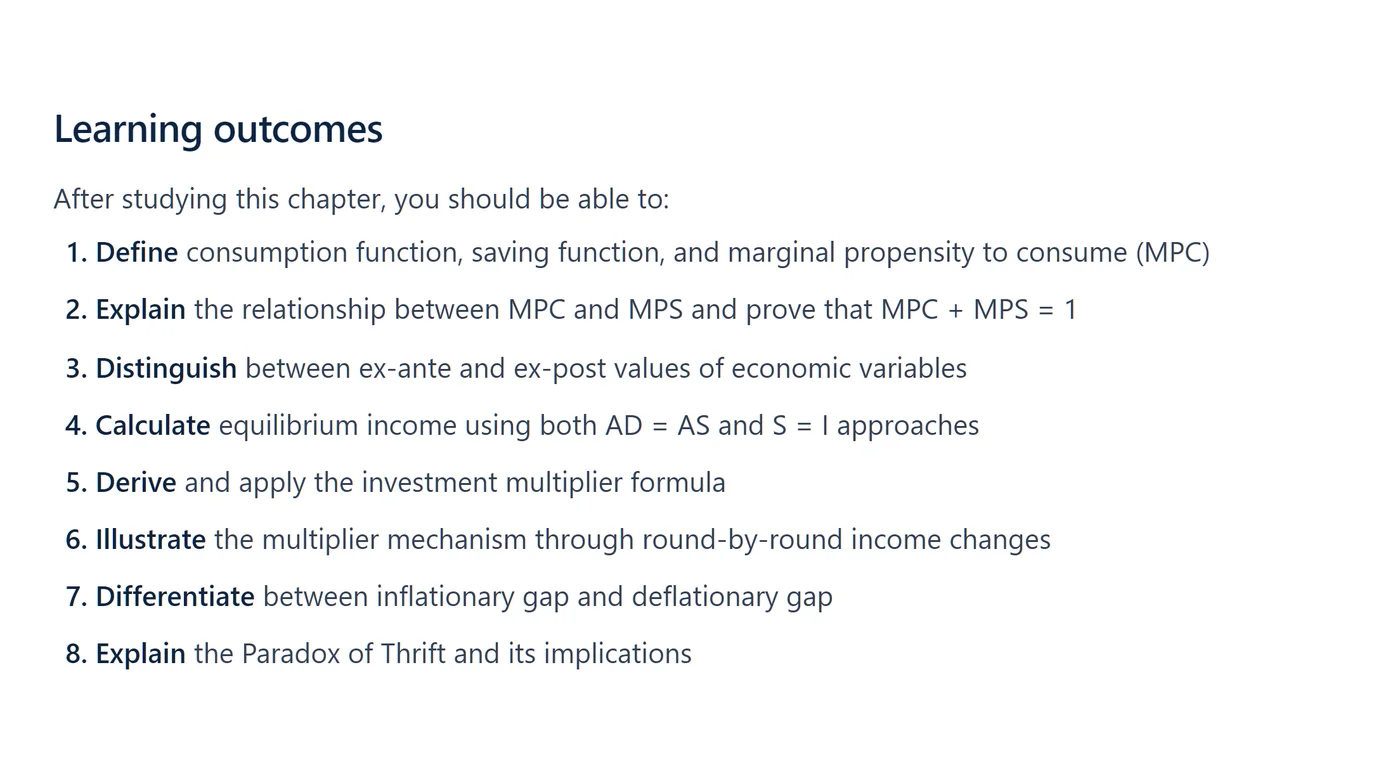
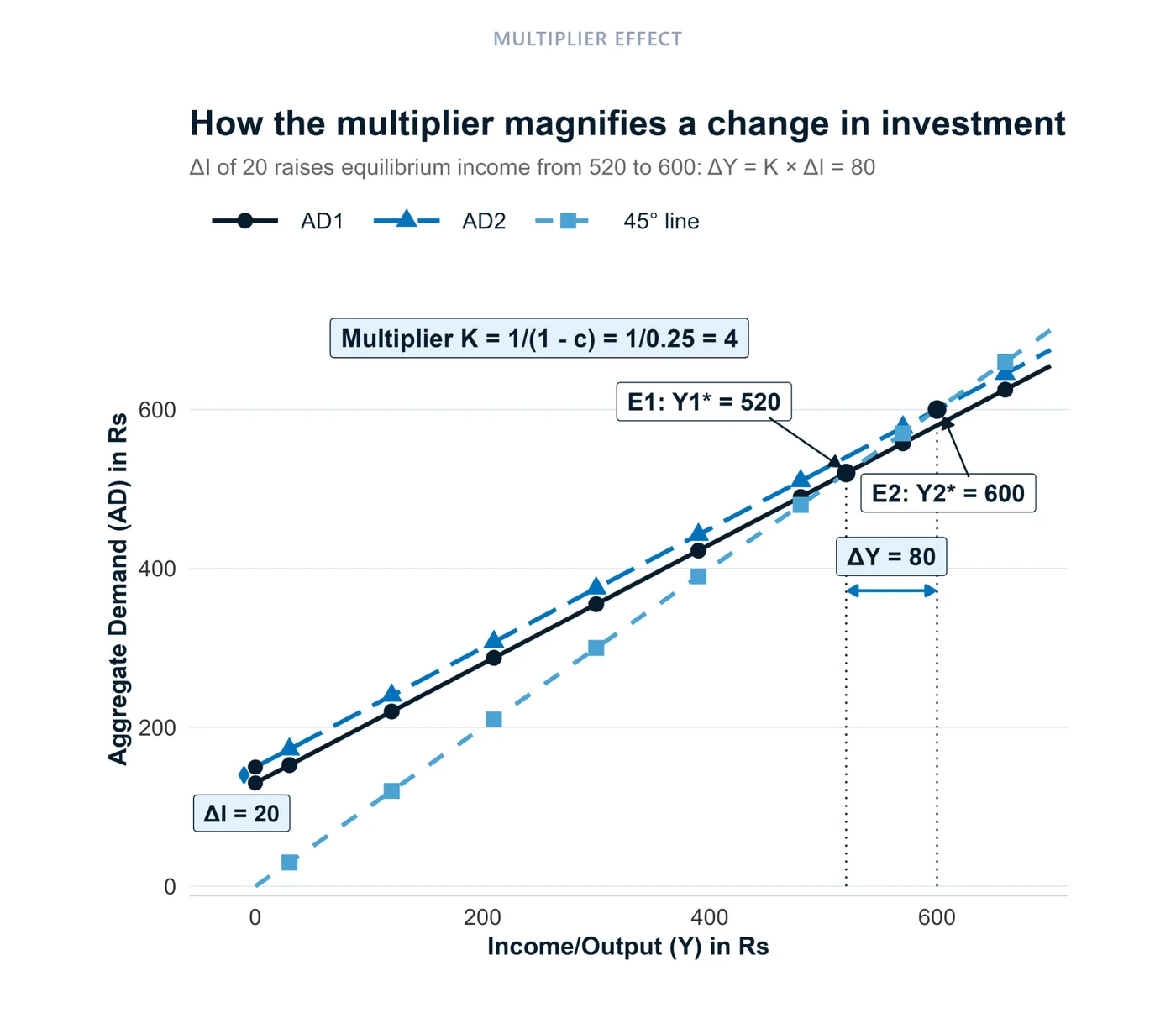
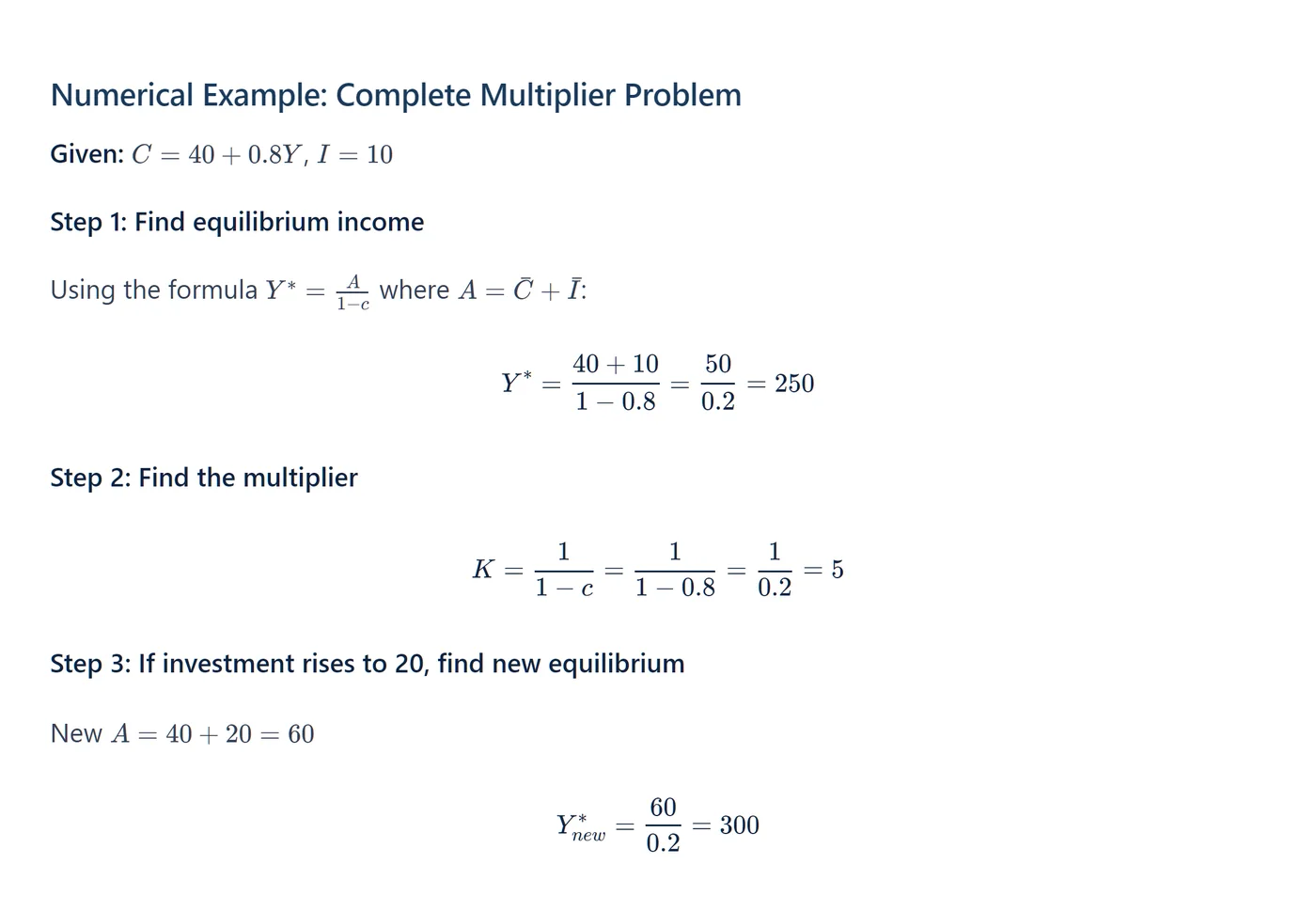
Learn every important concept, formula and definition with our NCERT-based Flashcards.
CUET Economics Passage-based Questions
Every paper tends to have 2 passages, with 5 questions each. About two-thirds can be answered from the passage, and the rest test the chapter.
Passage questions by type
Share of the passage questions, CUET 2026
| Type | Example | Share |
|---|---|---|
| From the passage | As a project, TANWA was initiated in which of the following states? | 71% |
| From the chapter | Economists call unemployment prevailing in the Indian farming sector: | 22% |
| Numericals | If the value of the marginal propensity to save is 0.25, then the value of the investment multiplier will be: | 7% |
Try a Full CUET Economics 2026 Paper
Practise on all 52 CUET Economics papers from 2022 to 2026 for free, as full mocks and chapter-wise tests, with really simple solutions.
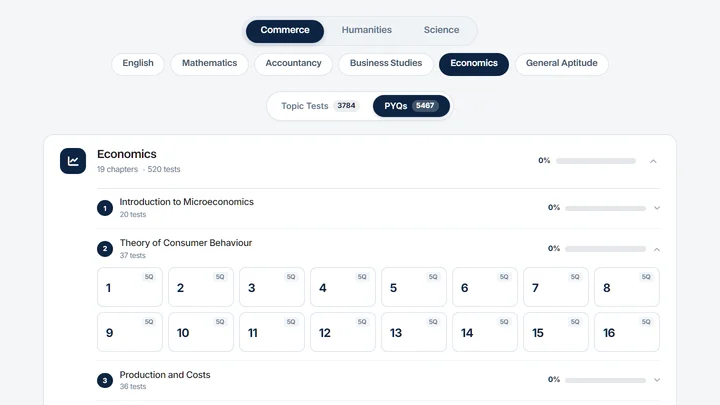
Detailed analytics after every attempt, so you know how to structure your prep.